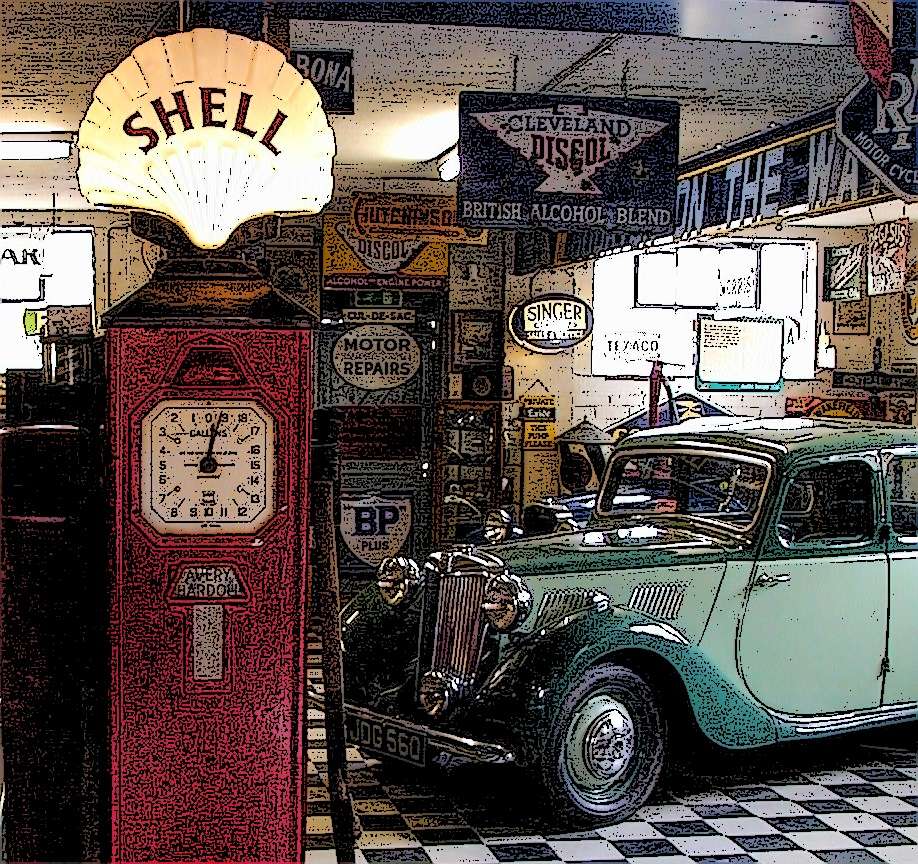
The simplest definition of fuel is any substance burned for heat or power. Even in the model world this covers a lot of different fuels and so I will try and list them along with data and other interesting facts.
- Butane
- Diesel
- Glow Fuel – a mixture of methanol, nitromethane, and oil.
- Methanol
- Petrol
- Propane
Additives – Chemicals added to fuel in very small quantities to improve and maintain fuel quality and/or to lower emissions. Detergents and corrosion inhibitors are examples of gasoline additives.
Cetane Number – A percentage indicating the ignition quality of diesel fuels. It is actually a measure of a fuel’s ignition delay. This is the time period between the start of injection and start of combustion (ignition) of the fuel. In a particular diesel engine, higher cetane fuels will have shorter ignition delay periods than lower cetane fuels. Cetane number is determined by an engine test using two reference fuel blends of known cetane numbers. The reference fuels are prepared by blending normal cetane (n-hexadecane), having a value of 100, with heptamethyl nonane, having a value of 15.
Higher Heating Value (HHV) – The standard measure of the energy released during combustion of a fuel, assuming the product water is in the liquid state.
Lower Heating Value (LHV) – The standard measure of the energy released during combustion of a fuel, assuming the product water is in the gaseous state.
Methyl Tertiary Butyl Ether – A fuel oxygenate used as an additive to gasoline to increase octane and reduce engine knock.
Octane Number – A rating of the ‘knock’ characteristics of motor fuels. The octane number is equal to the numerical value of the percentage by volume of iso-octane, C8H18, in a mixture of iso-octane and heptane, C7H16, having the same knock characteristics as the fuel being tested. The higher the octane number or rating, the greater are the antiknock qualities of the petrol. A rating of how much fuel can be compressed before it ignites spontaneously.
| Heptane | 0 |
| Diesel Fuel | 15 to 25 |
| ISO-Octane | 100 |
| Benzene | 101 |
| Methanol | 108.7 |
| Methane | 120 |
Oxygenated Fuel – Any fuel substance containing oxygen, such as ethanol, methanol, or biodiesel.
Petrol – A volatile, flammable liquid mixture of hydrocarbons, obtained from petroleum and used as a fuel for internal-combustion engines. The chemical composition is often idealised for equations as Iso-Octane which has the chemical formula C8H18.
Spark Plug – Electrical device that fits into the cylinder head of an internal-combustion engine and ignites the gas by means of an electric spark.
Tetraethyl Lead – One gram of Tetraethyl Lead increases the octane of one gallon of gasoline about 6 numbers. The EPA has phased down the use of lead in gasoline as it has been determined to be a health hazard. Lead has been prohibited in highway vehicle gasoline since January 1, 1996.
Xylene – Derived from petroleum and used to increase octane. Xylene is highly photochemically reactive and, as a constituent of tailpipe emissions, is a contributor to smog formation.